

Protection for one-off jobs and construction work at height.
Quick, portable setup.
We manufacture portable ZOIS temporary systems, in textile or steel cable, ready to set up, use, and remove for each one-off job.
Materials
Quick, portable setup.
— Our systems
A certified system adapted to each roof type and installation project.
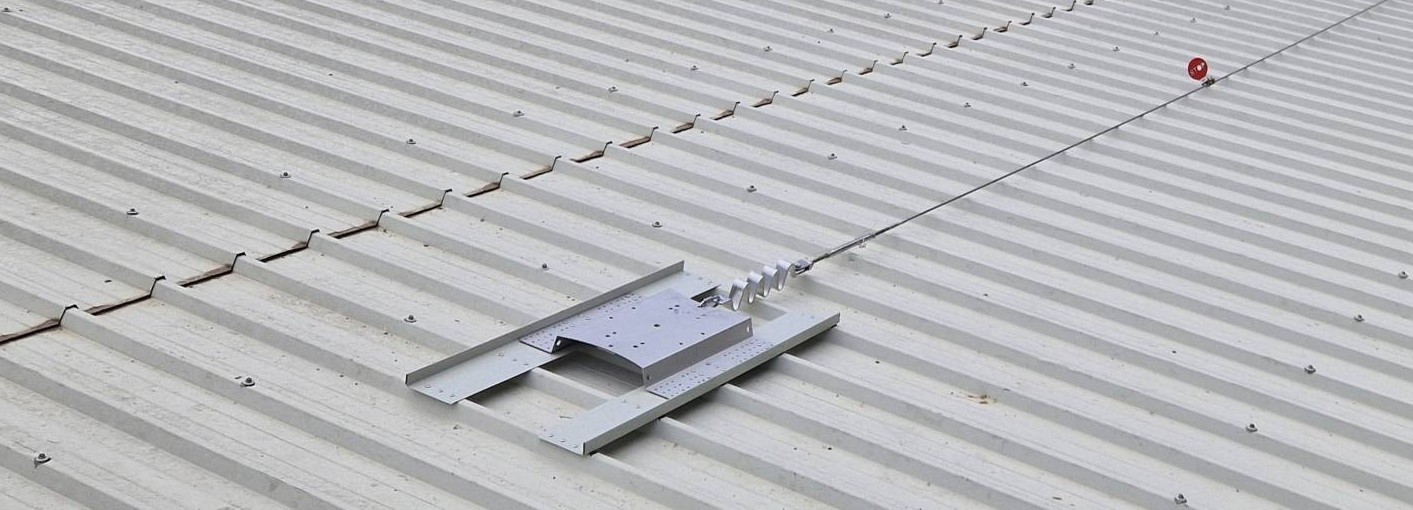
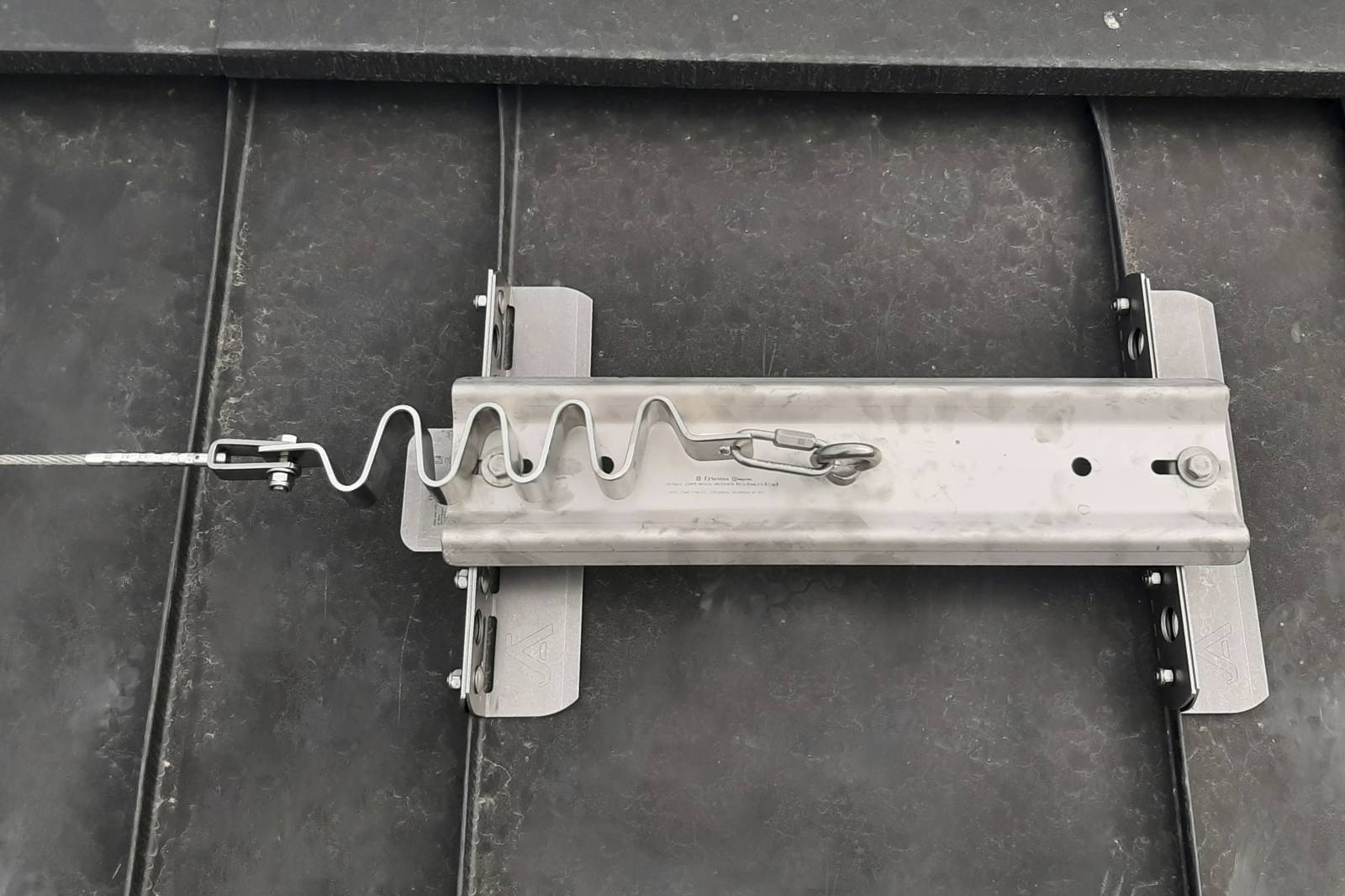
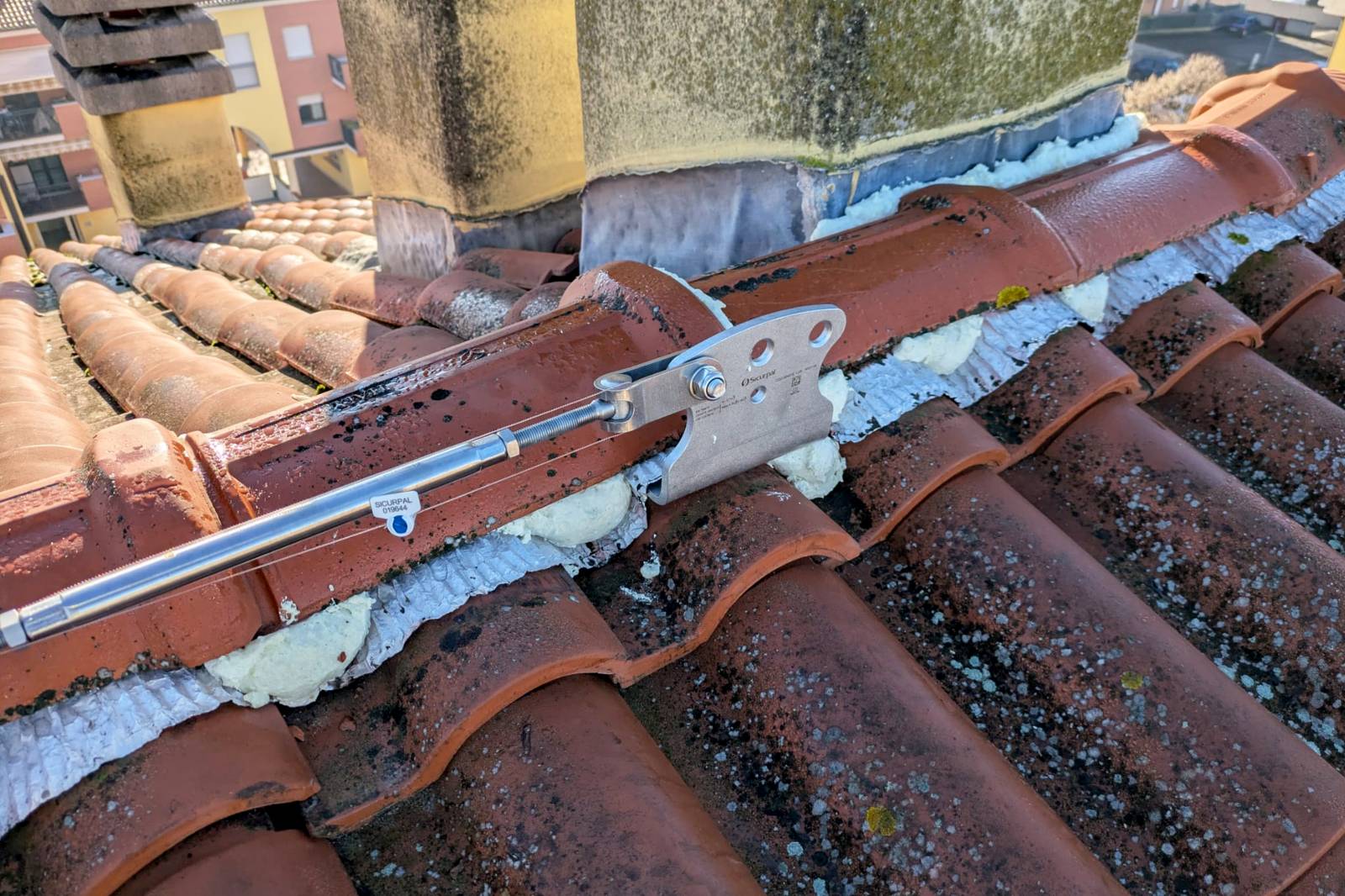
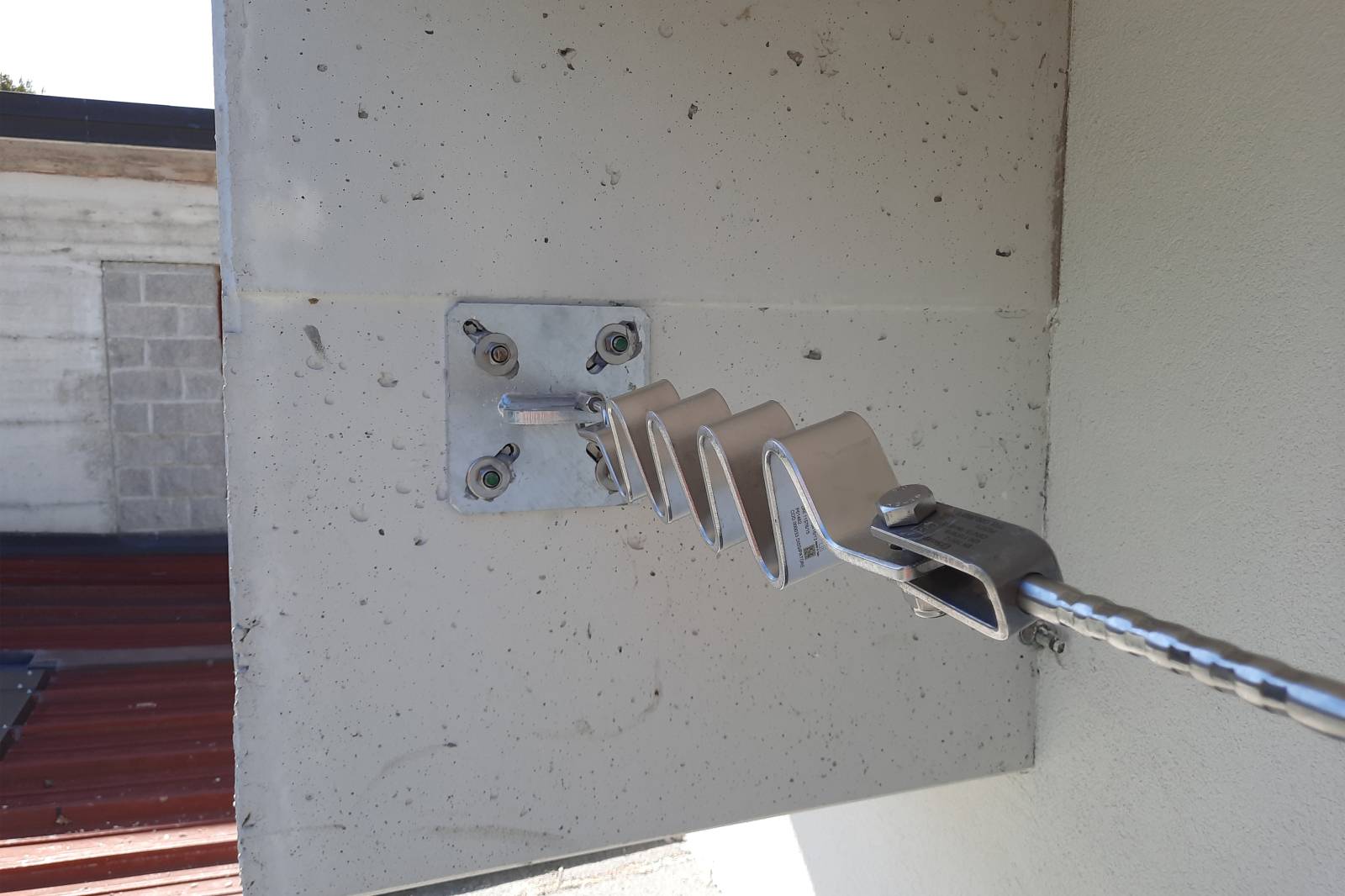
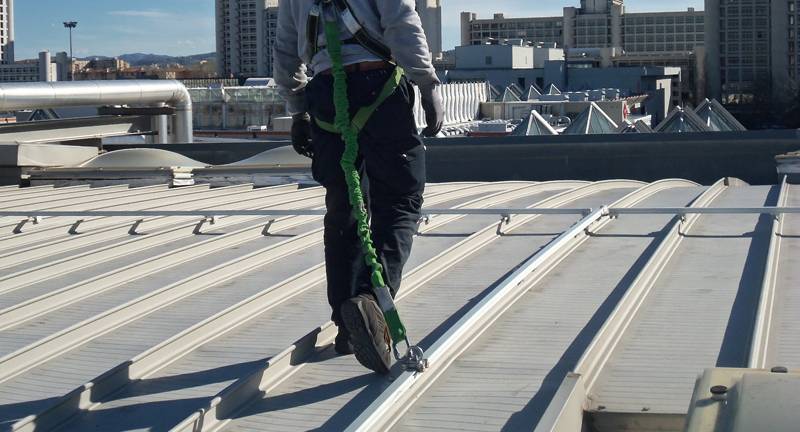
— USES
Collective protection comes first; the temporary lifeline comes in when the scenario does not allow it or the duration of the job does not justify it.
Construction phases where there is no permanent perimeter protection yet, steel structure and roof assembly.
Annual servicing of air handling units, exhaust systems, or rooftop photovoltaic installations, without leaving a fixed system in place.
Bridges, walkways, and one-off roof repairs where a permanent installation is not warranted.
All of our production takes place in Spain. This allows us to control quality, offer tight lead times, and customize any project without extra costs.
Quote response
Shipping after quote acceptance
— FEATURES
We size the system using the figure that truly decides whether it works: the minimum free fall clearance below the work plane.
01 / TECHNICAL STUDY
We verify the structural capacity of the substrate and calculate the minimum free fall distance based on the clearance available on site.
02 / CUSTOM DESIGN
We choose the material according to the allowable deflection, the number of simultaneous users, and the anchoring surface: metal sheet, concrete, beam, or parapet.
03 / TECHNICAL DOCUMENTATION
Declaration of conformity, installation manual, and technical data sheet with every delivery, backed by independent laboratory testing.
— QUOTE
Tell us the type of roof, the planned route, and the available clearance height. We will send you a sized proposal with the ZOIS system best suited to your project.
Mon–Fri · 7:00 AM to 3:00 PM · Direct technical support
We will reply within 24 business hours.
A permanent lifeline is a fixed installation, permanently anchored to the structure, designed in the project phase and subject to periodic, recorded inspection. A temporary or provisional one is set up for a specific job and removed when it is finished: its anchors are transportable and rest on existing structural points. Both serve the same function (arresting a fall and limiting the force transmitted to the body) and both require testing and documentation. What changes is the permanence of the anchor and, with it, the calculation, the cost, and the maintenance regime.
Installation must be carried out by personnel with specific training in work at height, following the system manufacturer’s manual, which is the document that sets the strength requirements for the anchor point, the permissible surfaces, the installation tension, and the maximum number of users. Before installing, you must verify that the point to which the device is anchored has sufficient structural capacity: the manual does not settle that check; the project or the competent technician does. The fact that it is a portable system does not make it equipment for unrestricted use.
The temporary textile lifeline is the most widely used for one-off jobs, since it installs quickly and its lightweight design makes both setup and transport easier.
To ensure it works properly, it is important to follow the conditions of use set by the manufacturer and to check that the system suits the job to be done. Points worth keeping in mind include:
Compared with textile, the temporary steel cable lifeline is heavier and takes longer to set up, but it deflects less. The choice between a textile or cable solution should always be made based on the characteristics of the installation and the specific requirements of the job.
The choice of a temporary system depends fundamentally on the axis along which the risk occurs, since moving across a roof and climbing a ladder are situations that call for different configurations.
This configuration covers lateral movement across the work plane and is anchored at both ends, whether to a steel structure, a concrete column, or an anchor point that is already installed, so that the worker moves while connected by means of a lanyard and an energy absorber. It is the most widely used portable horizontal lifeline configuration, both on construction sites and in roof maintenance work.
This system is designed to protect the climb, and in it the anchor line is usually a rope fitted with a thimble at the upper end, together with a guided type fall arrester with a locking function that accompanies the user along the entire route. Because it uses a flexible anchor line, the portable vertical lifeline is subject to the UNE-EN 353-2 standard, and is suitable for occasional access by ladder or structure, although when the climb is for recurring use, the system must be permanent.
The weak point of any temporary lifeline is not the webbing or the cable, but the element it is fixed to, since the transportable anchor transmits the entire arrest load to the substrate, and that substrate must be properly verified. We manufacture and supply temporary anchors for the most common surfaces, including steel profile, concrete, parapet, beam, and metal sheet.
Trapezoidal metal sheet is the most delicate surface, since a point anchor placed on a thin-gauge rib concentrates the load on an area that was not designed to receive it, so the sheet may tear before the system even comes under load. The solution is to spread that load by means of load distribution plates resting on several ribs, by fastening to the supporting structure beneath the sheet when it is accessible, or by using wide-base anchors that distribute the stress. To size this solution correctly, we need specific data, such as the sheet thickness, the rib pitch, and the type of purlin under the roof, information that lets us determine whether a temporary anchor is feasible on the roof in question or whether, on the contrary, the project requires another solution.
Temporary or Permanent: When Installers Choose Each
The decision between one system and the other usually comes down to four main variables:
Criterion | Temporary | Permanent |
Access frequency | One-off or occasional | Recurring, scheduled |
Fastening | Transportable anchor to an existing point | Fastening integrated into the structure |
Leaves an installation behind | No | Yes, with a logbook and annual inspection |
Upfront cost | Low | Higher, recoverable through use |
Annual maintenance on an air handling unit is well served by a temporary system. A roof with monthly worker traffic is not: setting up, verifying, and dismantling for every job ends up costing more than a fixed installation.