

Certified protection for work at height
Our ANANKE guardrail is available in both straight and inclined versions in all its models.
We manufacture collective protection systems for roof edges and level changes. ANANKE counterweighted, sheet-mounted, floor-mounted, or wall-mounted guardrails, tested and custom-made for each project.
Profiles
Minimum height
Our ANANKE guardrail is available in both straight and inclined versions in all its models.
— Our models
Each ANANKE guardrail is designed for a specific surface (counterweighted, sheet-mounted, floor-mounted, or wall-mounted). Choose yours or ask us for technical advice.
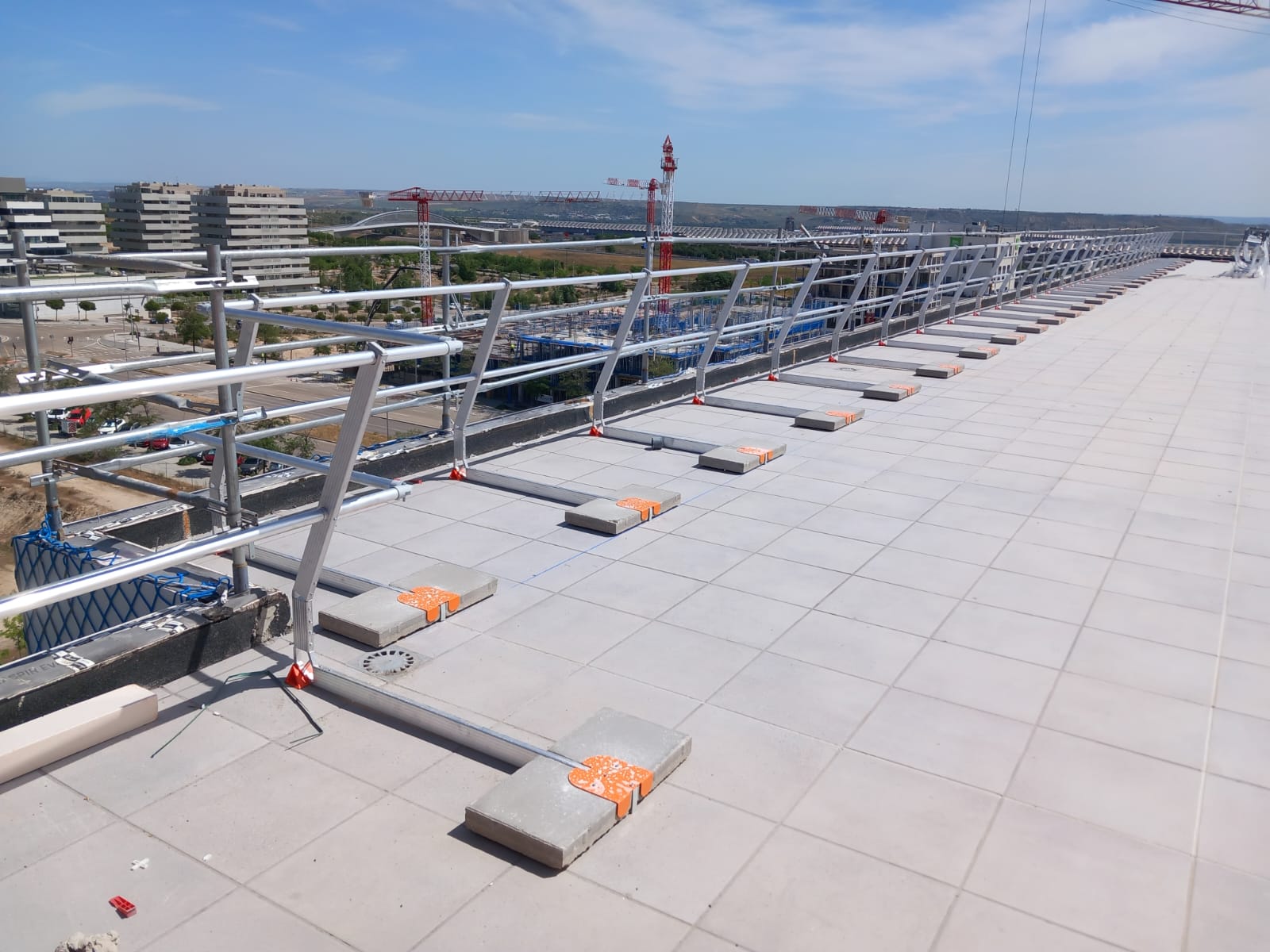
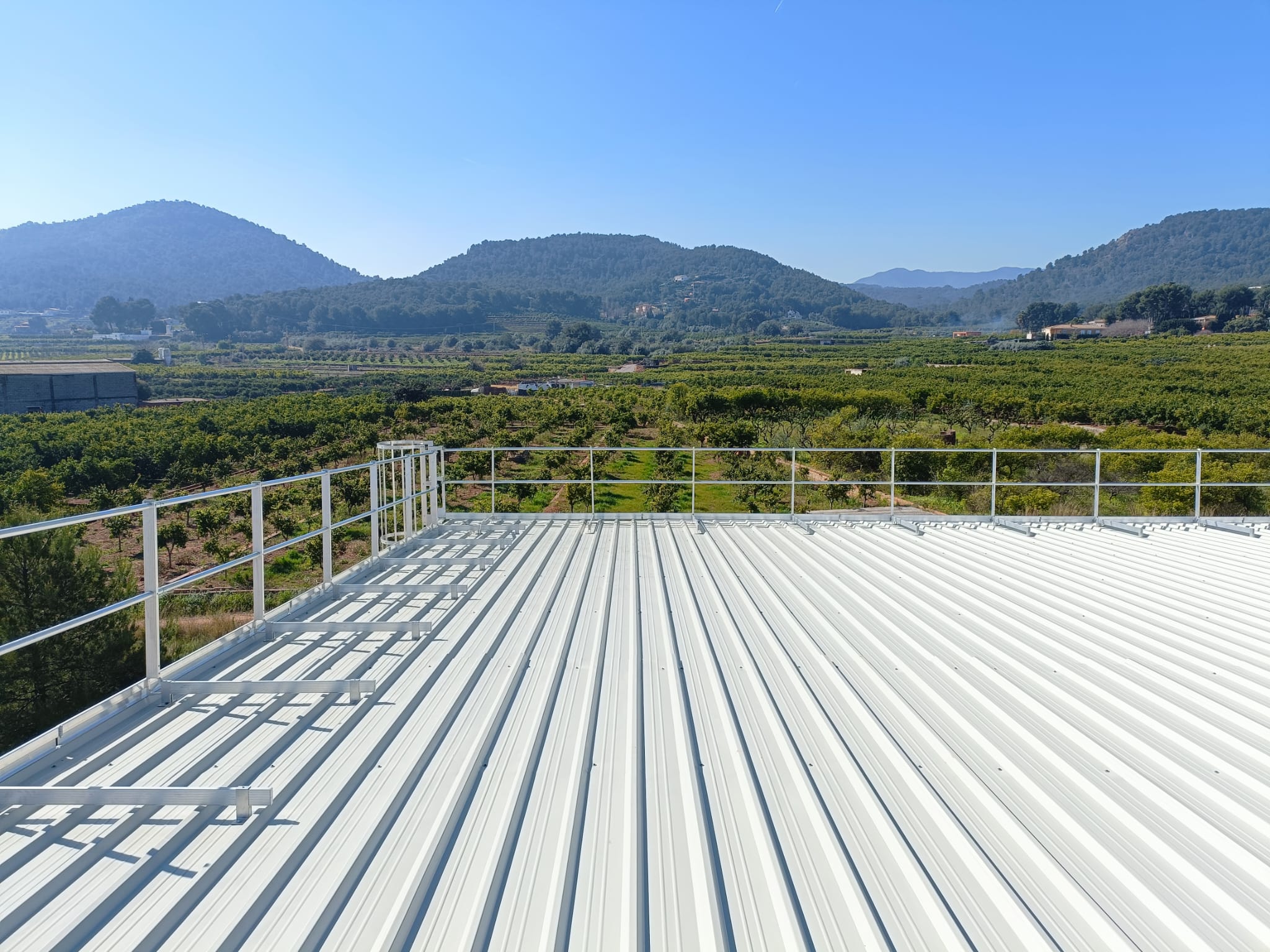
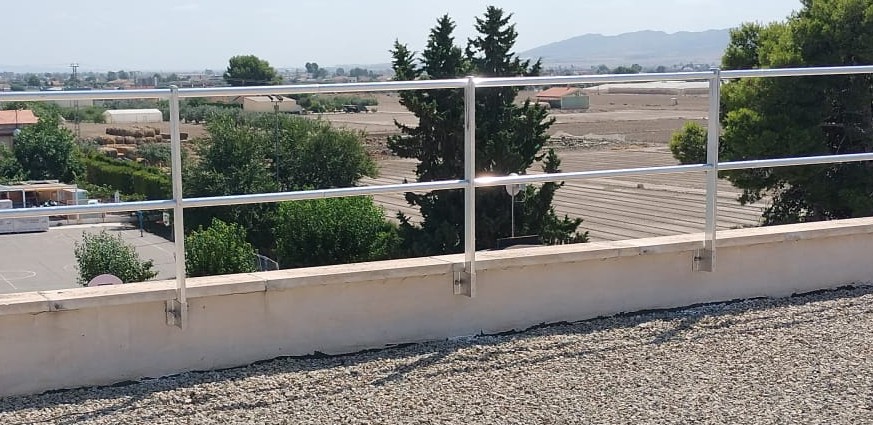
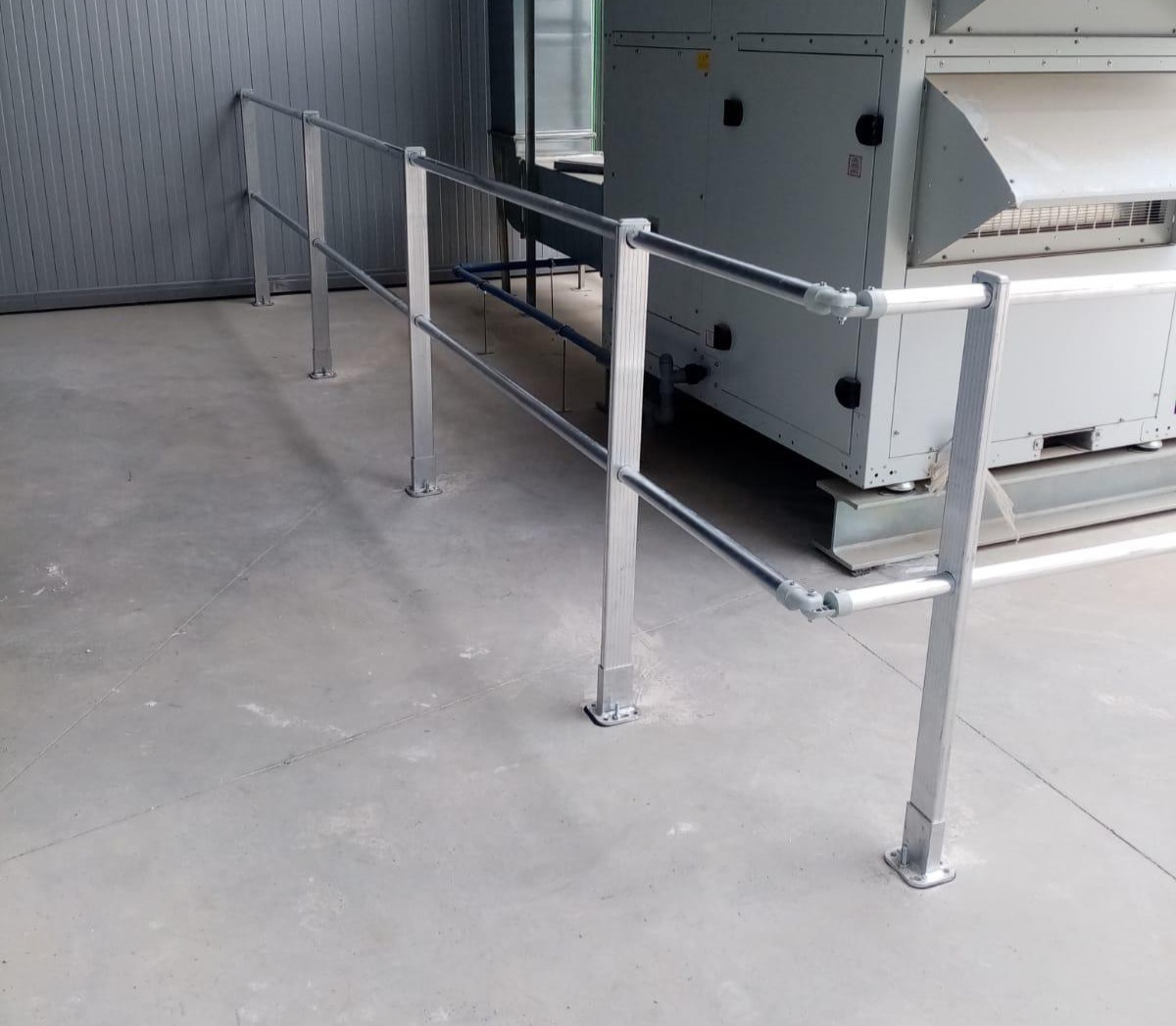
— WHERE DO YOU NEED THE GUARDRAIL?
Safety guardrails for roofs, terraces, walkways, and any elevated area with a risk of falling. Each surface has its own anchoring solution.
Perimeter protection on roofs of industrial buildings and shopping centers, where the fall risk is concentrated at edges and level changes.
Guardrails for walkways, bridges, and elevated platforms that must withstand the force of a lateral impact without giving way.
Protection around domed skylights, wastewater treatment plants, and level changes in any area higher than two meters.
All of our production takes place in Spain. This allows us to control quality, offer tight lead times, and customize any project without extra costs.
Quote response
Shipping after quote acceptance
— How we work
From first contact to final documentation. We handle the entire fall arrest system cycle:
01 / PROJECT
We prepare the drawing, data sheet, and fixed quote.
02 / FACTORY
We produce each guardrail in our own facilities with the exact surface, anchoring, and dimensions of your project.
03 / DELIVERY
We provide a certificate of conformity, test reports, and a data sheet with every shipment.
— QUOTE
Tell us the linear meters, the surface type (sheet metal, concrete, gravel, or wall), and the location. We will send you a fixed, no-obligation quote within 24 hours.
Mon–Fri · 7:00 AM to 3:00 PM · Direct technical support
We will reply within 24 business hours.
The minimum height of a safety guardrail must be 90 cm, measured from the floor or the surface it rests on. In addition, the guardrail must be strong and able to withstand the load it is subjected to without deforming or giving way.
The space between the vertical components of the guardrail must not be greater than 10 cm, to prevent a child or a pet from passing through. In the case of ANANKE, the distance between posts is 1,500 mm in general, and 1,600 mm on the ANANKE Plate model.
Four: ANANKE Weight, counterweighted with no need to drill into the roof; ANANKE Plate, fixed onto trapezoidal or flat sheet; ANANKE Ground, anchored directly to concrete or a parapet; and ANANKE Wall, fixed to a wall or vertical structure. A special anchor is required for kal-zip roofs.
Permanent edge protection guardrails are manufactured in accordance with the UNE-EN 14122-3 standard, which governs permanent means of access to machinery and industrial installations. Temporary guardrails must comply with the UNE-EN 13374:2013 standard. All of this is in line with Law 31/1995 on Occupational Health and Safety, which prioritizes collective protection over personal protection.
Regular cleaning with water and neutral soap, periodic inspection to detect corrosion, deformation, or cracks, anticorrosion treatment if the guardrail is metal, and inspection after any impact to check that it has not lost firmness.
No. The anchoring depends on the surface: counterweighted if the roof cannot be drilled, sheet-mounted with self-drilling screws, floor-mounted if there is concrete or a parapet, and wall-mounted if a vertical structure is available. Knowing the types of guardrails by surface helps you choose the right ANANKE model for each situation.
A safety guardrail is a protective structure installed along the edges or level changes of roofs and structures to prevent falls and protect people from accidents.
Guardrails are commonly used on stairs, balconies, terraces, walkways, roofs, and any elevated area that could pose a risk of injury from a fall. They are designed to withstand the force of an impact without giving way, providing a physical barrier against falls. They can also incorporate different finishes depending on the project.
Edge protection guardrails are intended to ensure people’s safety anywhere above two meters in height.
Maintenance of safety guardrails is set by the manufacturer. The recommended inspection schedule for keeping the warranty valid depends on each model.
Beyond that, there are some basic recommendations you can follow to keep these systems in good condition:
In short, proper maintenance prevents problems and helps ensure people’s safety.
Edge protection guardrails are collective protection and, as such, one of the most widely used and recommended fall protection systems for safeguarding people who perform any work within those areas.
Their main function is to prevent people from losing their balance and falling from height, thereby avoiding a workplace accident.
In addition, guardrails help define and ease access to risk areas, such as work-at-height zones or roof edges. This allows workers to move across the surface with greater confidence and safety.
Edge protection guardrails must meet a series of technical standards and specifications before they can be installed.
Article 15, paragraph 1, states that “among the measures to be taken regarding risk prevention, measures that give priority to collective protection over personal protection must be adopted.”
Article 17 provides that “personal protective equipment must be used only when risks cannot be avoided or cannot be sufficiently limited by technical means of collective protection or by work organization measures, methods, or procedures.”
UNE standard covering permanent means of access to machinery and industrial installations. Part 3: stairs, stepladders, and guardrails.
The French standard NF E 85-015 is stricter, requiring both static and dynamic tests to validate the strength of guardrails.