


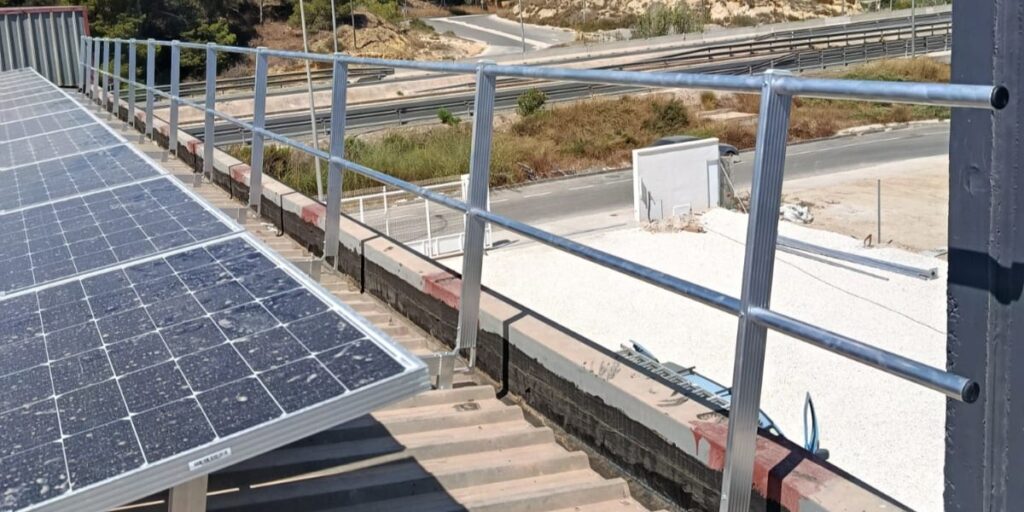
On a single project, you may need three different types of guardrail: one for the section with a concrete slab, another for the metal sheet area where drilling is not allowed, and another for the finish against a parapet. Choosing the wrong type can become a problem, because if the fixing does not match the actual roof surface, the system loses the strength it was tested for. As an installer, getting the right type at the project stage avoids rework and ensures that the collective protection installed for work at height meets what the standard requires from the first installation.
A safety guardrail is a collective protection fall arrest system, and as such it does not depend on the worker using PPE; this system protects by its own design. In this post, we will discuss the different types that exist by surface and application, and how to know which one is right for each section of your job site.
What to Consider Before Choosing a Type of Guardrail
Before choosing, there are three important factors to consider: what surface you have underfoot (concrete, metal sheet, sandwich panel, deck roof), whether that surface can be drilled without compromising watertightness, and what type of traffic the area will have. This factor determines the type of fixing, and the fixing is what makes the guardrail comply with the standard under which it was designed and tested, UNE-EN 14122-3. The reference distance between posts is 1,500 mm, with a handrail and intermediate rail in 3 m bars, aluminum profiles, and plastic joint pieces, regardless of the type of anchoring chosen.
Types of Guardrails by Installation Surface
The surface on which the guardrail is installed directly determines the type of fixing that can be used: concrete, metal sheet, roofs that cannot be drilled, or perimeter walls require different solutions. An unsuitable choice can compromise the watertightness of the roof, void waterproofing warranties, or result in a fixing that is not compatible with the roof. Below, we cover the four types of guardrails by installation surface.
Floor-Mounted or Concrete Guardrail
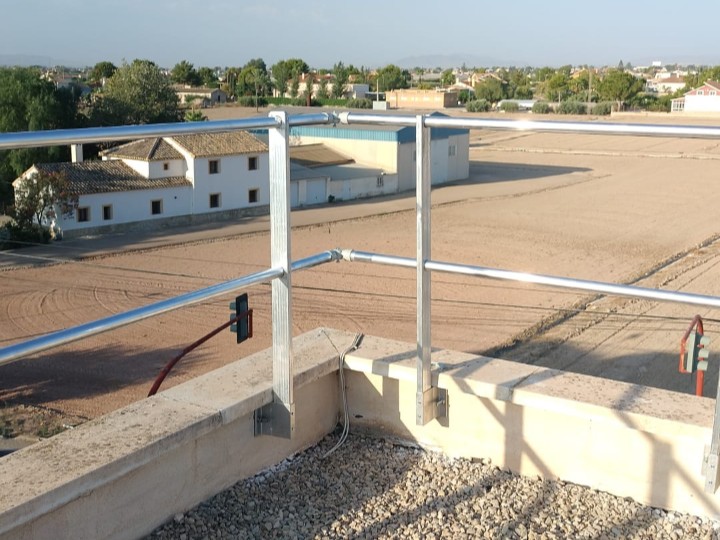
The floor-mounted guardrail is anchored directly to the concrete base or parapet using mechanical fasteners. It is the most stable option when the roof allows it, because the anchor rests on a rigid base and does not depend on a counterweight. It is common on industrial walkable roofs, where the concrete parapet is already part of the original construction.
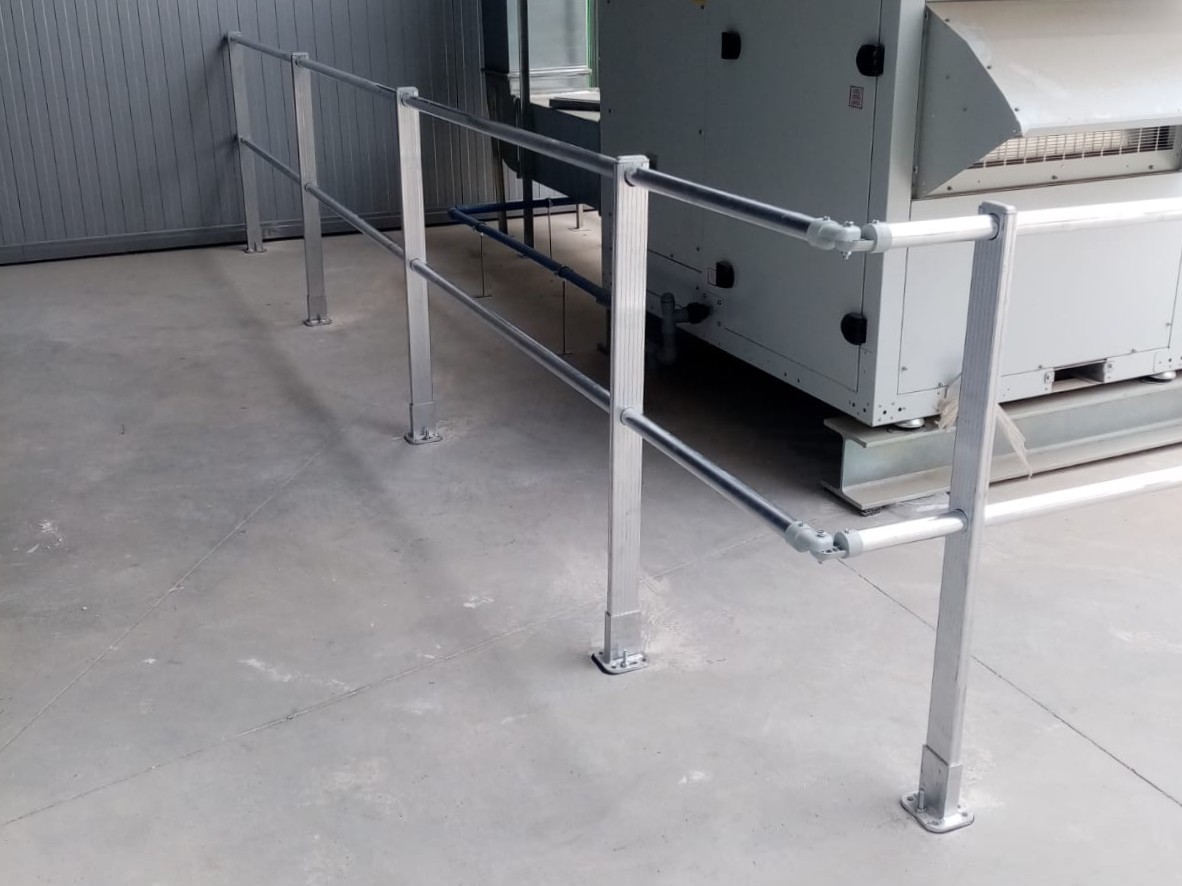
Sheet-mounted guardrail
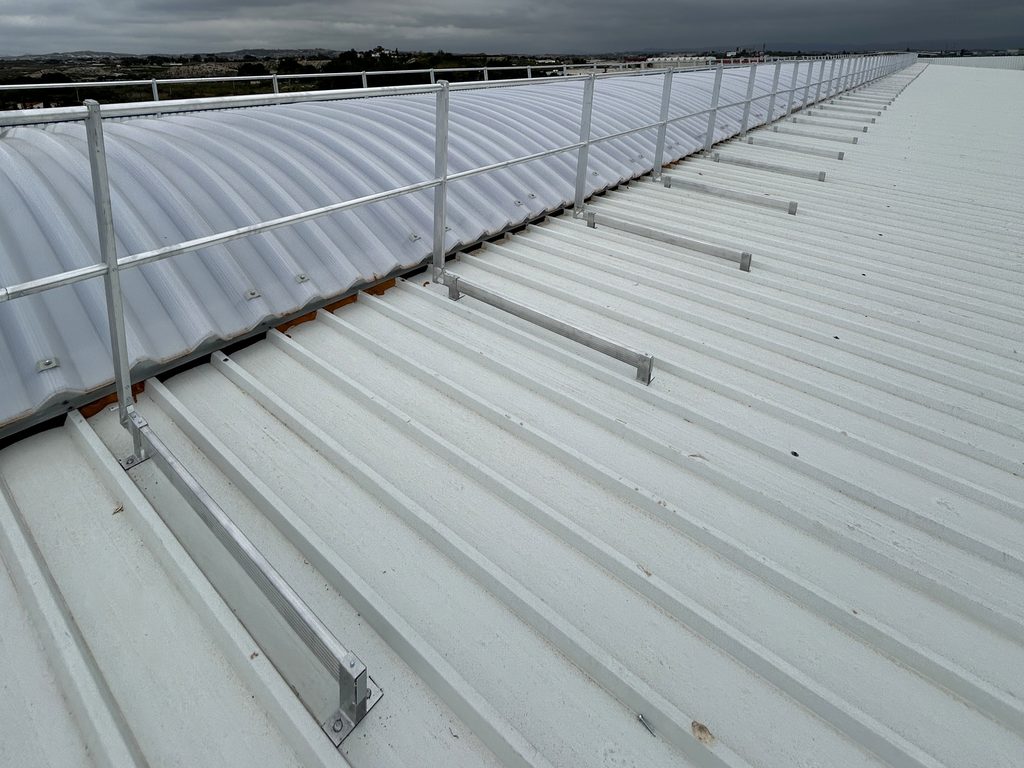
The sheet-mounted guardrail is fixed to trapezoidal metal sheet or sandwich panel with hex-head self-drilling screws, calculated so as not to compromise the watertightness of the roof. It is the type to specify when the surface is metal and there is no concrete base to anchor to.
Counterweighted guardrail
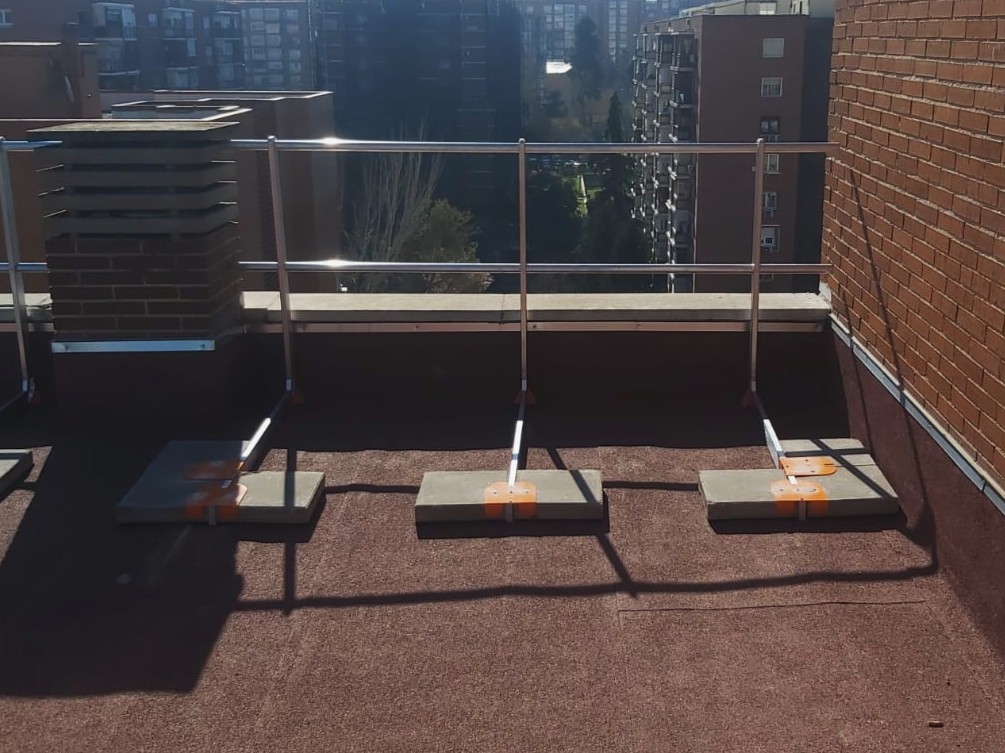
The counterweighted guardrail is used where the roof cannot be drilled, such as deck roofs, standing seam roofs, or gravel roofs. The system rests on counterweights, with no need for mechanical anchoring, which makes it the ideal option when the installation does not allow direct fixing.
Wall-mounted guardrail
The wall-mounted guardrail is fixed laterally to a wall or vertical parapet. It is the solution when the available floor space is limited or when the project’s finish requires a perimeter anchor to the existing structure.
Types of Guardrails by Job Site Application
In addition to surface, it is worth distinguishing guardrail types by the function they serve on the roof.
Perimeter or Edge Guardrail
The perimeter guardrail is used at the edge of any roof, flat roof, or walkable area at height where there is a risk of falling to a lower level. It is the type used by default at the project stage because, as collective protection, it does not depend on the worker correctly using PPE.
Guardrail for Roofs and Pitched Roofs
The guardrail for roofs and pitched roofs adds one more variable: the slope. On non-walkable or sloped roofs, the model must be installed in an inclined configuration that maintains the required protection height regardless of the angle of the roof slope, something a standard guardrail designed for flat surfaces does not address.
How to Choose the Type of Guardrail for Your Project
On a job site, choosing the type of guardrail depends above all on the characteristics of the surface it will be anchored to, so the first step is always to identify the type of roof and what needs to be protected. Where there are skylight or rooflight areas that require another type of safety system, such as safety netting.
At YPSOS SAFETY, our products are made in Spain and tested with the backing of an independent laboratory, with the certification documentation needed for bidding or inspection. If you have questions about which type fits your roof, request a quote and we will help you choose the best option for your project.