


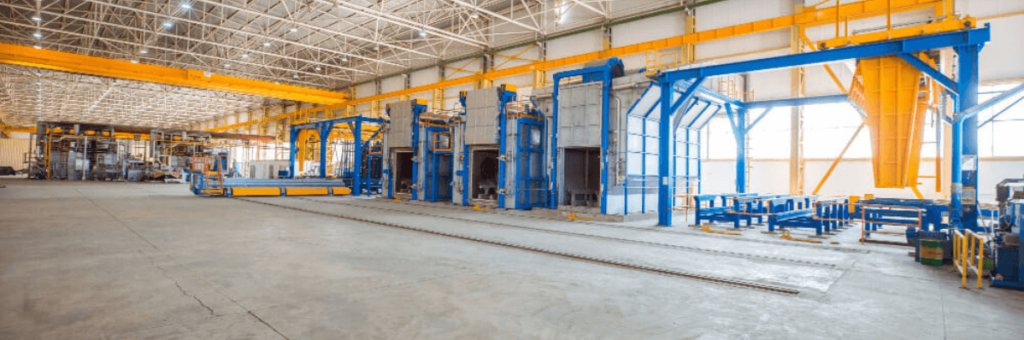
We need to know which different hazards exist when entering an industrial building that affect worker safety and the integrity of the facility, so that we can remedy them. Therefore, below we will analyze them to see what measures we can take to avoid them.
Hazards Inside an Industrial Building
Inside an industrial building or warehouse there are a number of hazards, very different from one another, that we need to take into account and assess.
Electrical Safety Hazards
Industrial facilities often have high-voltage electrical equipment, exposed cables, and complex power systems that can cause electric shocks, short circuits, or fires if not handled properly.
Fire Hazards
The possible presence of flammable substances, combustible materials, hot machinery, and electrical equipment greatly increases the risk of fire in industrial buildings. These fires tend to grow very large quickly and are very difficult to control.
Chemical Hazards
Hazardous chemicals used in industrial processes can pose a risk to workers’ health if they are handled incorrectly or if spills or leaks occur. These chemicals can be corrosive, toxic, flammable, or explosive.
Mechanical Safety Hazards
Heavy machinery and tools used in industrial operations can cause serious injuries if they are not used correctly or are not properly maintained. Accidents involving entrapment, crushing, or cuts are possible mechanical hazards.
Ergonomic Hazards
Repetitive tasks, handling of heavy loads, and awkward postures can cause musculoskeletal injuries and work-related disorders, such as carpal tunnel syndrome or back pain.
Safety Hazards at Height
If the activity is carried out on elevated platforms, on ladders, or on scaffolding, there is a risk of falls whenever the appropriate safety measures are not implemented. The area must be studied to determine which measures are most suitable, whether guardrails, safety harnesses, etc.

Environmental Hazards
Industrial buildings can generate air, water, and soil pollution due to gas emissions, wastewater discharges, or chemical leaks. These hazards can have negative impacts on human health and the surrounding environment.
Internal Transport Safety Hazards
The movement of industrial vehicles such as hoists, forklifts, and trucks inside the building can pose a danger to workers if proper safety procedures are not followed or if traffic areas are poorly defined.
Construction Safety Hazards
During the construction, repair, or maintenance of the industrial building, hazards can arise such as falls from height, exposure to hazardous chemicals, entrapment risks in confined spaces, and dangers related to the use of heavy tools and equipment.
To mitigate these hazards, it is essential to implement appropriate safety measures, provide adequate training to workers, carry out regular inspections, and comply with OHS regulations on occupational safety and health.
Hazards at Height Inside an Industrial Building
At this point we will list the various dangers we may encounter when working at height. These dangers are significant because of the presence of elevated structures, such as walkways, platforms, ladders, and vertical storage areas.
Let’s list the various dangers we may encounter when working at different levels.
- Falls from height: This is the most obvious and serious risk. If workers are not properly protected with guardrails, safety harnesses, or safety nets, they can fall from walkways, scaffolding, or elevated platforms.
- Slips and trips: Elevated surfaces can become slippery due to the buildup of dust, spilled liquids, or loose materials. Workers can also trip over objects or cables while at height, which increases the risk of falls.
- Unsafe access: Climbing on and off platforms or ladders can be dangerous if the designated access points are not used or if transit areas are not kept free of obstacles. Workers can lose their balance when entering or leaving elevated areas.
- Falling objects: Poorly secured objects can fall onto workers below, which is why they must wear hard hats.
- Unstable structures: Walkways, platforms, or ladders can become unstable due to corrosion, deterioration, or poor installation. This increases the risk of structural collapse while workers are at height.
- Chemical leaks: on the other hand, care must be taken because work at height can involve handling hazardous chemicals which, in the event of a leak or spill, can affect the worker, with risks of inhalation or skin contact.
Fall Protection Measures
To mitigate these hazards, it is essential to implement specific safety measures to ensure workers’ safety. For example, installing fall protection systems such as safety guardrails and side protection, crossovers, and platforms for operators to pass when there are objects in the way.

Besides these safety systems, we must give our operators specific training on the work to be done, as well as provide the necessary PPE.
As we have seen, there are various hazards inside an industrial building. In upcoming posts we will take a closer look at the safety measures and systems we must install to avoid the risk of falling when working at height.