


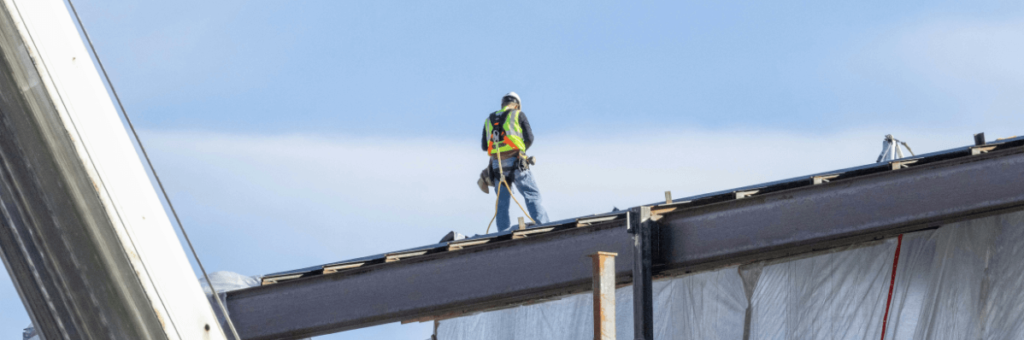
Today we will define what work at height is and what it involves, we will talk about the risks these types of jobs present (such as safety on wind turbines) and how we can avoid them.
What Is Work at Height?
By work at height we mean any work activity performed at a distance of more than 2 meters from the ground, where there is a risk of falling. This distance is measured from the work surface to the lower level where there is a danger of the worker falling.
However, this height distance may change depending on the work at height safety regulations in Spain or the safety standards of the type of industry.
The best-known types of work at height are:
- Building construction and maintenance: Tasks such as erecting structures, welding, or repairs on scaffolding, ladders and elevated platforms.
- Installation and maintenance of towers and antennas: Personnel working in telecommunications, electricity, or mobile network infrastructure who must work on tall towers and poles.
- Facade and window cleaning: Includes cleaning work on multi-story buildings, which usually involves the use of suspended platforms, harnesses and ropes.
- Tree trimming and forestry work: Forestry and gardening workers who perform their tasks in elevated areas and use restraint equipment and special ladders.
- Assembly and maintenance of industrial structures: Activities carried out in industrial spaces, such as chemical plants or factories, which involve working on cranes, tanks and other tall structures.
- Solar panel installation and roof repair: People who install or repair roofs, solar panels, or ventilation systems on the roofs of commercial and residential buildings.
- Maintenance in the wind energy sector: Technicians who perform inspections and repairs on wind turbines work at great heights, facing adverse weather conditions and confined spaces.
Risks in Work at Height: What Can We Do?
Work at height is one of the riskiest work activities in many sectors, from construction to building cleaning and infrastructure installation.
Working several meters above the ground raises the likelihood of a serious, even fatal, accident. This can be avoided by taking the appropriate safety measures for work at height.
For these reasons, work at height is usually governed by strict regulations that require:
- The implementation of fall prevention systems (safety nets, guardrails).
- The use of specific personal protective equipment (harnesses, helmets, ropes).
- Training and certification for those who perform these tasks.
Proper application of safety procedures at height is what makes the difference between a controlled work environment and an unacceptable risk situation.
Let’s look at some of the specific risks and the ways they can be managed safely.
Falls to a Lower Level
Falls are the leading cause of accidents in work at height. Even when we are not very far from the ground, a fall can cause serious injury. To avoid this risk, work must be done after first installing a collective protection system, such as perimeter guardrails, safety nets where there are skylights, or lifelines that arrest the fall.
In addition, workers must wear the necessary PPE such as a safety harness, helmet and connecting elements. It is also essential to inspect equipment and provide regular training.
Slipping and Loss of Balance
When we work on surfaces that can be slippery or unstable, such as scaffolding or roofs, the chance of losing balance increases.
To avoid this, we must keep work surfaces clean and free of obstacles. Verify that the structure is properly leveled and secured, and wear suitable non-slip footwear.

Weather Conditions
Wind, rain, ice or storms can make work at height extremely dangerous, affecting visibility and balance. And at the other extreme, in periods of high temperatures, we can suffer heat stroke.
We must be aware of this, take measures and suspend work in unfavorable conditions. Use protective equipment against cold or rain if necessary, and make sure all restraint systems are in good condition. Also stay hydrated and avoid the times of day when it is very cold or hot.
Falling Objects
On the other hand, we must pay attention to where we leave tools, materials and equipment when working at height because they can fall and cause serious harm to those below.
To avoid this, besides staying alert, we can install safety nets to prevent perimeter falls or safety nets over skylights to prevent falls into the building.
Helmets should also be worn and the work area kept clear to prevent other people from entering risk zones.
Electrocution
Working near power lines or energized equipment increases the risk of accidental contact with electricity, which can be fatal.
We must identify and mark any source of electricity in the area. De-energize nearby lines whenever possible and use properly insulated tools, as well as the specific PPE for this type of space.
Use of Defective or Unsuitable Equipment
Personal protective equipment that is in poor condition or not suited to the task poses a direct risk to the worker’s safety.
Therefore, you must carry out periodic equipment inspections and replace any items showing signs of wear. Use only equipment suited to work at height and the specific task.
Conclusion
In short, work at height requires strict planning along with good compliance with safety protocols. Ongoing training, correct use of protective equipment and monitoring that working conditions are met are essential to prevent accidents.
Prioritizing safety in these environments is key to reducing risks and ensuring workers’ well-being, combining personal protective equipment such as the fall arrest harness, safety helmet and connecting elements with fall protection systems at height such as guardrails, lifelines or nets.