


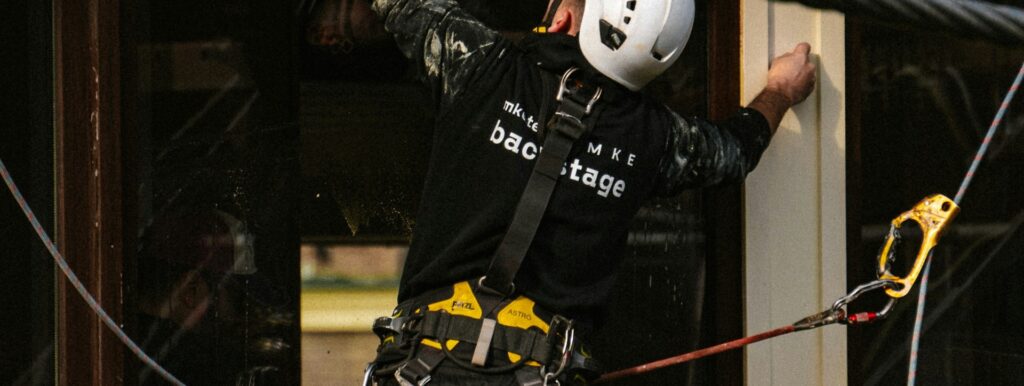
In work at height, safety is vital, as it can mean the difference between a minor accident and a fatal one. This means we must use the right fall arrest systems, including the personal protective equipment that best suits the needs of the project.
That is why in this week’s article we will talk about the different types of safety harnesses we can work with and which one to use in each case.
Why Won’t Just Any Harness Do for Work at Height?
Using an unsuitable fall arrest harness when performing work at height can create safety risks for the worker, because although all of them are designed to provide protection in the event of a fall, each job has specific needs.
Using an unsuitable harness can result in a dangerous fall, difficulty moving, or even the inability to carry out a quick evacuation in an emergency.
Factors That Determine the Choice of a Harness
When selecting a harness for work at height, we must consider the following aspects:
- The type of work to be performed: Whether it involves static or dynamic tasks, or access to areas such as confined spaces.
- The anchor system: Fixed or mobile anchors will influence the type of harness needed.
- The work environment: Factors such as weather, temperature, or exposure to hazardous substances can affect the durability and safety of the harness.
- Ergonomics: The harness must be comfortable for the user, allowing freedom of movement without compromising safety.
Harness According to the Installed Safety System
As we have mentioned, the choice of harness can vary, so before anything else we must know the types of harnesses we may come across:
- Fall arrest harness, with 1 or 2 attachment points
- Suspension harness, with several attachment points or rings
- Work positioning harness, with several rings and a positioning belt
In this post we tell you more about the different types of PPE.
One of the aspects that influences the choice of our safety harness is the type of anchor system we have installed. Below we go over some examples of what we may encounter:

Roof with safety guardrail
If we are going to perform tasks in an area with a safety guardrail covering the entire perimeter, and there are no unprotected areas such as fragile roofs, in principle we will not need a fall arrest harness, since there will be no risk of falling
But how do we get onto that roof?
Most commonly, to go up and down from the roof we have a ladder, which can be a stair ladder with its own guardrail or a fixed vertical ladder.
In the second case, the ladder must have a fall arrest system, either a vertical lifeline or an anchor point with a self-retracting lifeline. This will influence the harness to choose, since it must have a ring or attachment point on the front (sternal ring) in order to climb up and down safely.
Sewer With Tripod Access
If we are going to work in a confined space such as a sewer system and our only means of access is a tripod, we must take this into account when choosing our harness:
- How we will proceed if we need to be rescued
- Where we will attach the self-retracting lifeline and where the tripod winch
- Whether inside the sewer we need to anchor to something
For this type of work, the ideal is to have a safety harness with two anchor rings plus a third rescue ring, since if an evacuation is needed this third ring would make the task easier.
Area With a Lifeline
Continuing with examples we may encounter when working at height, one of the most common is working with horizontal lifelines – temporary, permanent, rigid or flexible – and in these cases we need to know exactly what work will be performed:
Work facing the lifeline, that is, work where the worker is anchored and looking toward the line, the most suitable option is a fall arrest harness with a front or sternal ring.
Work with your back to the lifeline, when the worker is facing away from the line while performing the task, it is best to be connected to the system at the back, and so the harness must have a ring on the dorsal side.
Rope Access Work on Facades
In this case, choosing the harness is quite simple, since there are safety harnesses specific for rope access and work positioning, with the corresponding rings and a belt so that the worker can remain suspended more comfortably while performing the task.
Other Aspects to Consider Before Choosing a Harness
In addition to choosing the harness according to the safety system, there are other key factors that will affect its effectiveness and durability. It is essential to keep the following in mind:
What Standards Must a Harness Meet?
The safety harnesses we use must be designed, manufactured and tested under the regulations in force: EN361, EN358 or EN813 depending on the type of harness.
Most Common Mistakes When Using Them
Some of the most common mistakes when using a safety harness include:
- Not adjusting the straps correctly: A poorly adjusted harness can result in a dangerous fall.
- Not connecting the anchor points correctly: Making sure all anchor points are properly secured is vital to prevent accidents.
- Ignoring equipment maintenance: Failing to inspect or maintain the harness regularly can put the worker’s safety at risk.
How Often Should It Be Inspected?
In addition, the safety harness is a Category III PPE item, meaning it is considered essential to prevent serious or fatal harm to the worker, and it must therefore undergo inspections:
- Daily, before each use.
- Periodic, by qualified personnel.
- In the event of an accident.
Inspecting the safety harness is a crucial part of preventive maintenance.
In addition, harnesses have an expiration date indicated by the manufacturer in its manual and must be replaced after that date or after an inspection in which they are found unfit.
Conclusion
Proper use of a safety harness is essential to protect the lives of workers performing tasks at height. Not all harnesses are the same, and the choice depends on several factors, such as the safety system used, the type of work and the conditions of the environment.
In addition, compliance with safety regulations, regular maintenance and correcting common mistakes can make the difference between a safe workday and a serious accident.
At Ypsos, as manufacturers of fall arrest safety systems, we know how important it is for the system to work correctly in the event of a fall: from the anchor to the PPE, and that is why we design and manufacture the device best suited to the work to be performed.