


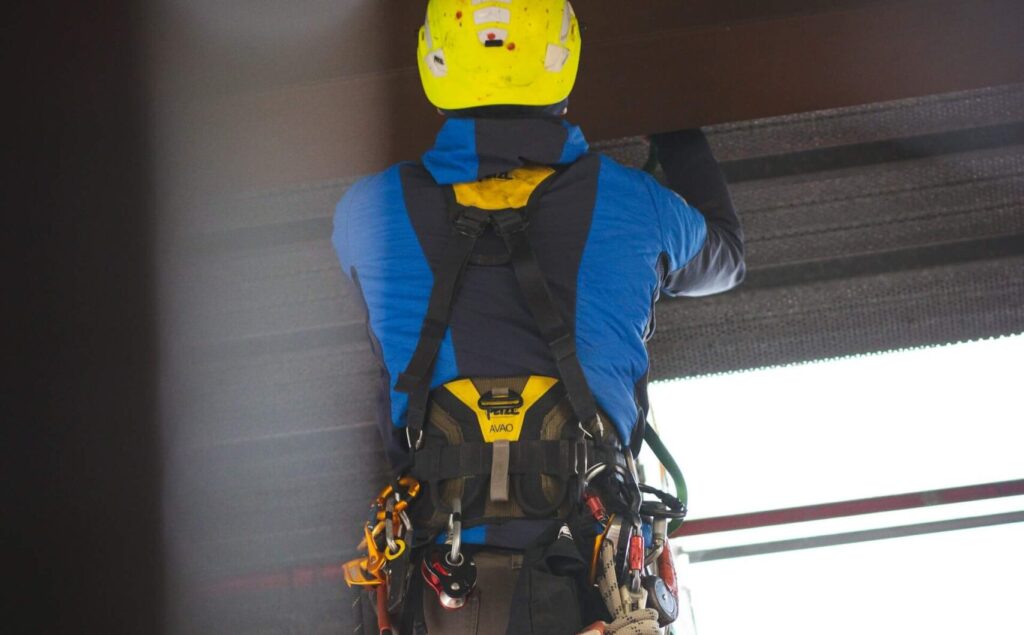
Personal Protective Equipment (PPE) is indispensable for performing tasks at height, so selecting it is essential to ensure safety and minimize workers’ risk across different industries and environments.
We have created a guide with practical tips to help you select the right PPE based on:
- The task to be performed
- The level of risk
- The working height
- The environmental conditions
What Type of PPE Will I Need for the Job?
Assessment and Analysis of Occupational Risks
Before selecting any PPE, the first step is to identify the type of work to be done and carry out a risk analysis. Each activity has its own hazards, which may include:
- Fall risk: Work done on roofs, scaffolding, aerial work platforms,… requires PPE that protects against falls
- Impact risk: When working with heavy machinery or tools, PPE must be used to protect the head and limbs
- Exposure to toxic substances: Industrial maintenance or cleaning tasks involve exposure to hazardous chemicals, so protective clothing and gloves must be used
- Extreme weather: For outdoor tasks or work in furnaces or cold storage rooms, suitable thermal clothing must be used
Types of Work at Height
In addition to the risks inherent in the tasks to be performed, we will need different PPE depending on the type of work at height. We have created three broad groups that cover various jobs:

Work at Height: Facades and System Installation
This group includes tasks such as maintenance and the installation of fall arrest systems or roof systems. The PPE to use would be:
- Fall arrest harness: Essential for preventing falls, and it must be a full-body harness
- Connecting element: This can be a lanyard, a self-retracting lifeline, … Its function is to connect the worker to an anchor device (lifeline, anchor point, …)
- Safety helmet: Must have a chin strap to keep it from falling off during sudden movements
- Safety shoes: Boots must have a sole that offers good grip on slippery surfaces and be resistant to falling heavy objects
- Gloves: Provide protection against impacts, cuts, or injuries

Construction Work
This second category includes construction and renovation work, whether on homes, industrial buildings, or any other property. To work with the right PPE, you should have:
- Safety helmet: Compliant with safety standards
- Steel-toe safety boots: Protect the feet against impacts, falling objects, and possible punctures from objects on the ground
- Hearing protection: On construction sites, noise from heavy machinery can be a hazard. Earplugs or earmuffs are necessary to prevent hearing damage.
- Protective gloves: Depending on the task, you should have gloves resistant to cuts, abrasion, or even contact with chemicals
- High-visibility clothing: In construction areas, high-visibility clothing must be worn to minimize accidents

Facade Cleaning
Here we would find tasks related to facade maintenance, whether on buildings, industrial facilities, or tall residential buildings, and they may involve minor inspections or window cleaning. The PPE to consider is therefore:
- Fall arrest harness: As with any work at height
- Safety rope: When the job is done as rope access work, it is essential to have both a working rope and a safety rope
- Helmet with chin strap: Protects the head from objects falling from height or impacts against structures
- Safety gloves: Must be durable, since cleaning tools and equipment that could cause cuts or abrasions are handled
- Protective eyewear: When cleaning chemicals are used or there is a risk of material fragments falling, this type of PPE must be worn
- Non-slip boots: In addition to protecting the feet, they must have a sole that offers good grip on slippery surfaces
What Should You Consider About the Work Environment?
The choice of PPE also depends on external factors such as the weather and the work environment, since each piece of PPE withstands different temperatures and may not work properly in extreme climates.
- Cold environments: When working in cold climates, whether outdoors or in a cold storage room, it is important to have thermal clothing and insulated gloves to protect against hypothermia
- Hot environments: When doing outdoor work in high temperatures or working, for example, in foundry furnaces, you should opt for lightweight, breathable, light-colored clothing
- Humid or wet environments: In environments where there is a risk of getting wet, such as outdoor work in the rain, it is important to wear waterproof clothing and boots with a non-slip sole to prevent falls on wet surfaces
Regulatory Compliance
Last but not least, whatever job we have to do and whatever PPE we need to use, it is crucial that it complies with safety standards and regulations: for example, fall arrest safety harnesses follow EN361 and safety helmets for work at height follow EN397.
Conclusion
As we have seen, selecting the right PPE depends largely on the type of task, the risks involved, the height at which the work is done, and the environmental conditions.
This is just a short guide of tips to help you choose the right PPE, but we must not forget that it is essential to carry out a risk assessment before starting any job to help us in the selection process.