


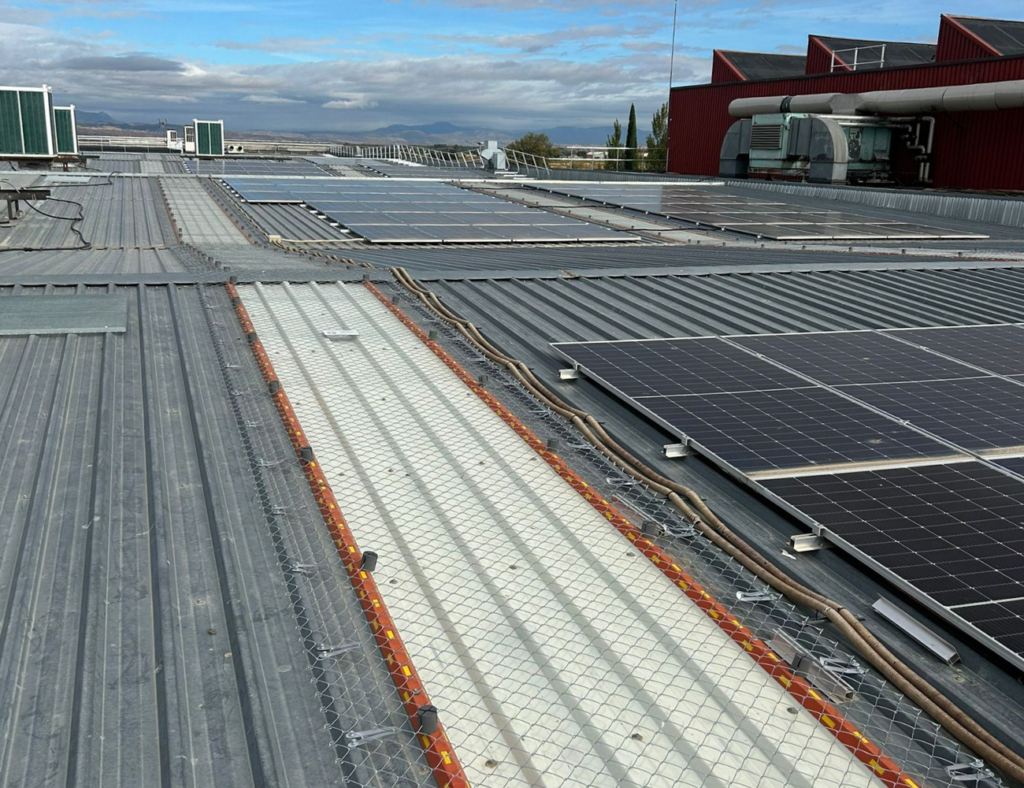
In the field of safety at height, one of the aspects that raises the most doubts, and causes errors with serious consequences, is the compatibility between systems from different manufacturers. As installations grow and expand, it is common for a single roof or work environment to have different protection solutions: lifelines, guardrails, protective nets, anchor points, access ladders.
The problem arises when it is not taken into account that these systems have been designed, tested, and certified as independent assemblies. Combining elements that were not developed to work together can compromise the effectiveness of the protection system, creating risks that are not always obvious until an incident occurs.
This post aims to clarify what is meant by compatibility between systems, how it affects the behavior of fall arrest systems, what the regulations say about it, and what steps must be followed to ensure an installation that is safe and complies with legal requirements.
What Is Compatibility Between Systems?
Compatibility between systems refers to the ability of different safety equipment or components to work together safely, without altering their intended behavior or compromising their effectiveness.
In the context of fall arrest and collective protection systems, this means that all the elements that make up a system (guardrails, lifelines, anchors, connection devices) must be able to work in a coordinated way, maintaining the performance for which they were designed.
It is not only a physical or dimensional matter, such as one part fitting mechanically with another. Compatibility also affects:
- Overall structural strength of the assembly
- Load transmission between different elements
- Deformation of the system under the loads it is subjected to
- Behavior in an actual fall
- Energy absorption capacity
A system may appear compatible from a mechanical standpoint but not be so from a safety perspective. This distinction is critical for correctly assessing the feasibility of combining equipment.
This does not mean that you cannot find different systems from different manufacturers in a work environment. We can perfectly well find a lifeline from one manufacturer and an access ladder or guardrail from another.
What this article means is that elements from different manufacturers cannot be mixed within the same system. In other words, in a safety guardrail, for example, we cannot find the vertical posts from one manufacturer and the tubes or connecting parts from another.
How Compatibility Affects the Development of Fall Arrest Systems
The development of fall arrest systems is based on tests and calculations that consider the behavior of the assembly as a single unit. Each component is designed taking into account how it interacts with the rest of the elements in the system.
Alteration of intended behavior
When components from another manufacturer are introduced, this interaction can change significantly. For example:
– A lifeline designed to work with certain anchors may experience different stresses if it is installed on a different support or combined with elements not originally intended.
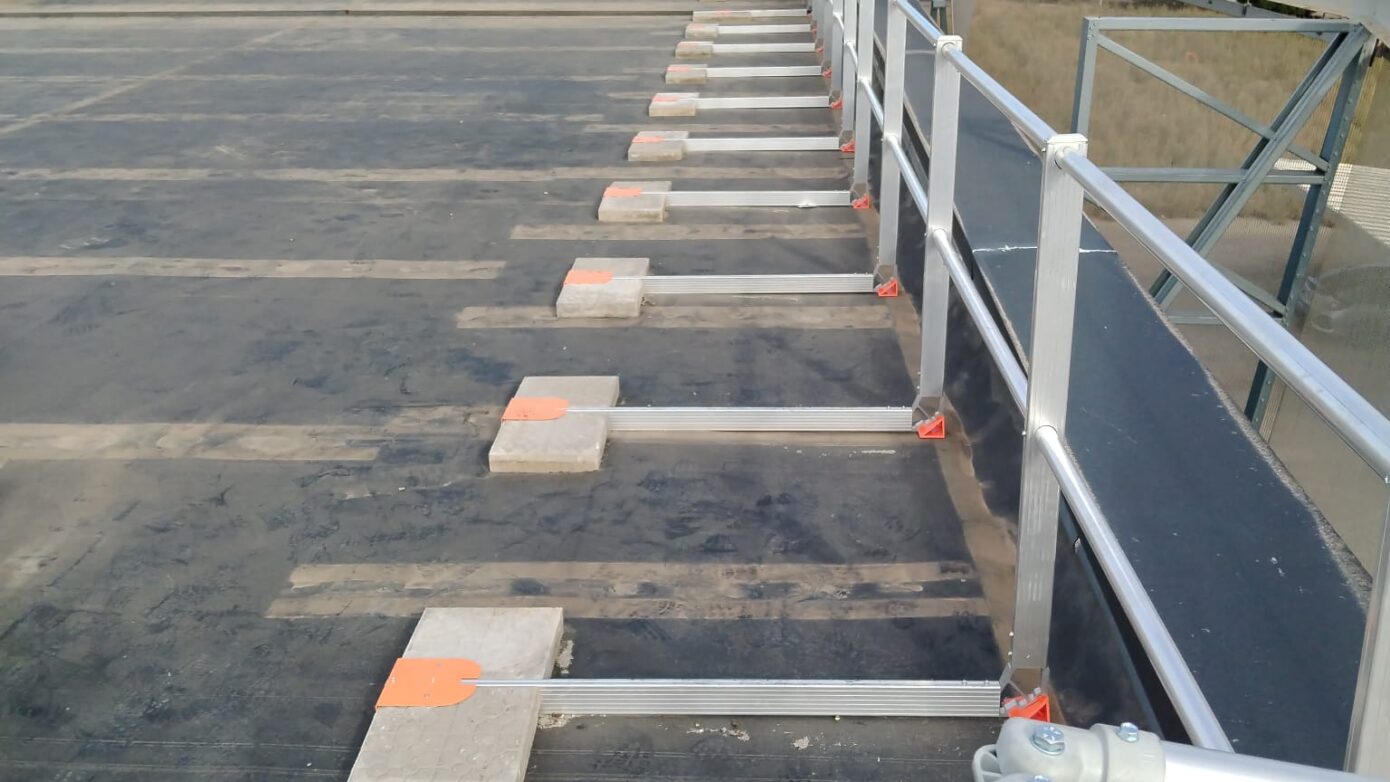
– A safety guardrail may have its stability compromised if its fastening system is modified or if it is integrated with structures not tested together, using different elements from different manufacturers that were not designed for that purpose.
These alterations can affect the system’s ability to absorb loads, dissipate energy, or maintain stability, which in real situations can result in a system failure when it is needed most. In conclusion, an accident.
Consequences of Using Incompatible Systems
Using incompatible systems can cause various problems, some of them hard to detect by visual inspection:
- Unpredictable behavior in emergency situations
- Reduced service life due to accelerated fatigue of components
- Loss of structural strength of the assembly due to improper load transmission
- Unforeseen deformations that compromise the functional geometry of the system
- Failures at joints or connection points not sized for the actual loads
In the worst case, these incompatibilities can cause total system failure in the event of a fall, with potentially serious consequences for workers’ safety.
Regulatory Framework on Compatibility
Safety-at-height regulations do not always address compatibility explicitly, but they do establish clear principles that must be followed.
Fundamental principle
The key concept is that equipment must be used in accordance with the manufacturer’s instructions and within the conditions for which it was designed and tested. This means that any modification or combination of systems must be technically assessed.
Applicable standards
There are various standards that, directly or indirectly, affect the compatibility of fall protection systems:
Product-specific standards: regulate lifelines (EN 795), anchors, guardrails (EN 14122-3), and other protection systems
Fall arrest PPE standards: establish requirements for personal protective equipment against falls (EN 363, EN 361, EN 360)
Law 31/1995 on Occupational Risk Prevention: establishes the employer’s obligations regarding safety
Royal Decree 773/1997: on the use of personal protective equipment
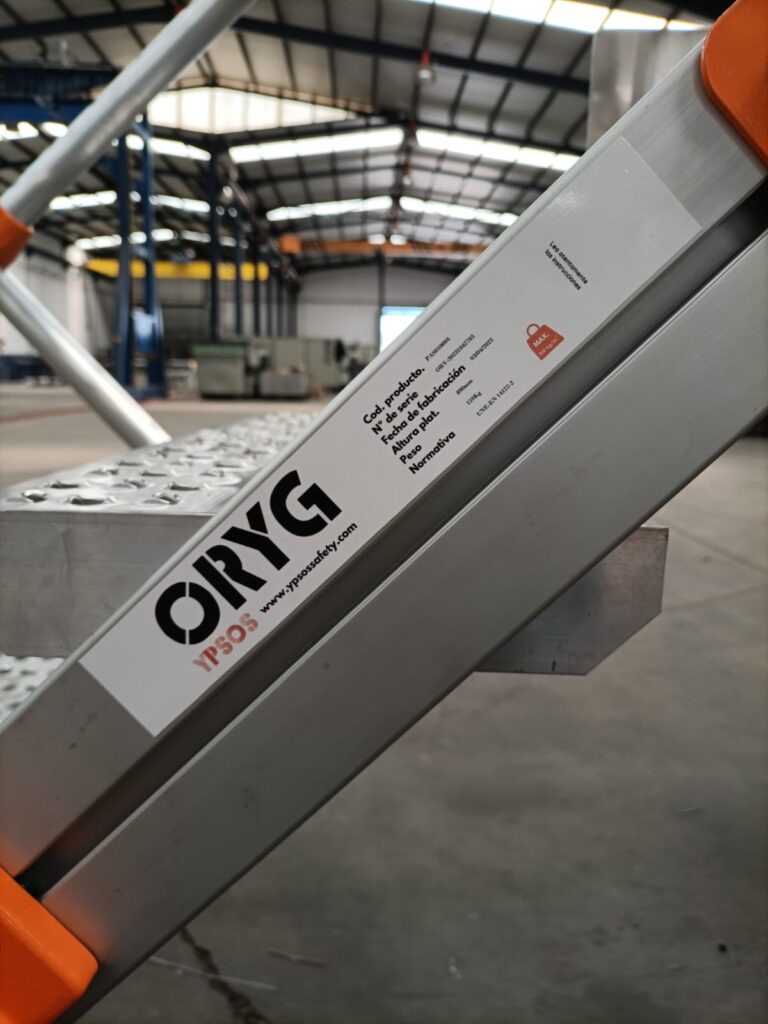
These standards set design, testing, and use requirements that must be respected to ensure the safety of the complete system.
Distribution of responsibilities
Responsibility for ensuring compatibility does not fall on a single party but is distributed among different actors:
Manufacturer:
- Design and test products in accordance with standards
- Provide clear information on use and limitations
- Specify compatibility conditions with other equipment
- Provide complete technical documentation
User company:
- Ensure that the equipment used is suitable and compatible
- Carry out a technical analysis of the planned combinations
- Document the decisions made
- Train workers on correct use
Worker:
- Use the equipment in accordance with the instructions received
- Report any anomalies detected
- Not modify systems without authorization
In practice, the greatest responsibility lies with the company that purchases and installs the systems, since it is the one that decides which equipment is combined and under what conditions.
Nature of the Manufacturer's Recommendations
The manufacturer’s recommendations are not mere optional suggestions. They are an essential part of the product’s technical information and must be considered mandatory insofar as they define the conditions for safe use.
- Ignoring these recommendations may result in:
- Non-compliance with current regulations
- Loss of manufacturer warranties
- Invalidation of certifications
- Assumption of legal liability in the event of an incident
Loss of Certification When Combining Equipment
Certifications are obtained after a system is tested under specific, controlled conditions. If those conditions are changed, for example by combining equipment from different manufacturers without technical validation, the certification may no longer apply to the result.
This does not necessarily mean the system ceases to be safe, but it does mean that there is no longer an objective guarantee of its behavior, which poses a significant risk from a technical and legal standpoint, and a responsibility that the installing company assumes.
Ensuring Compatibility: Technical Process
Ensuring compatibility between systems requires a technical, planned approach. It is not a decision to be made improvised on site.
Prior analysis of characteristics
It is essential to analyze the characteristics of the existing systems and of the new equipment to be added:
- Review the complete technical documentation
- Analyze product sheets and specifications
- Study installation and user manuals
- Verify certifications and tests performed
Consulting manufacturers
It is highly advisable to consult the manufacturers involved. In many cases, they can provide:
- Information on the compatibility of their products with other systems
- Specific technical validations for particular combinations
- Installation recommendations
Specialized technical support
Additional tests or calculations
For unusual or especially critical combinations, consideration should be given to carrying out:
- Specific compatibility tests
- Structural calculations for the assembly
- Load transmission analysis
- Verification by an independent body
Documenting the process
All information and decisions made must be properly documented, so that the compatibility of the system can be justified in the event of:
- Labor inspection
- Prevention audit
- Incident or accident
- Periodic technical review
Check Before Purchase
Before purchasing a new system, it is essential to evaluate how it integrates with existing solutions. This preliminary analysis helps avoid problems later on and ensures a safe installation.
Recommended Actions
- Analysis of similar cases or references from equivalent installations
- Evaluation of installation requirements and joint maintenance
- Review of the technical specifications of the new product and the existing systems
- Direct consultation with manufacturers about specific compatibility
- Verification of the conditions of use established by both manufacturers
Specialized Technical Advice
In industrial environments or those with demanding requirements, having the advice of a specialized technician can be decisive, as it makes it possible to:
- Identify incompatibilities that are not obvious
- Assess risks on a sound basis
- Propose viable technical solutions
- Validate the design of the complete system
In this regard, YPSOS SAFETY has a specialized technical department to advise and help with any questions that may arise regarding these systems.
Equipment from the Same Manufacturer: Advantages
In general, using equipment from the same manufacturer is the safest option from a compatibility standpoint:
Advantages:
- Systems designed to work together
- Performance of the complete system validated through testing
- Consistent technical documentation
- Unified technical support
- Certified compatibility guarantee
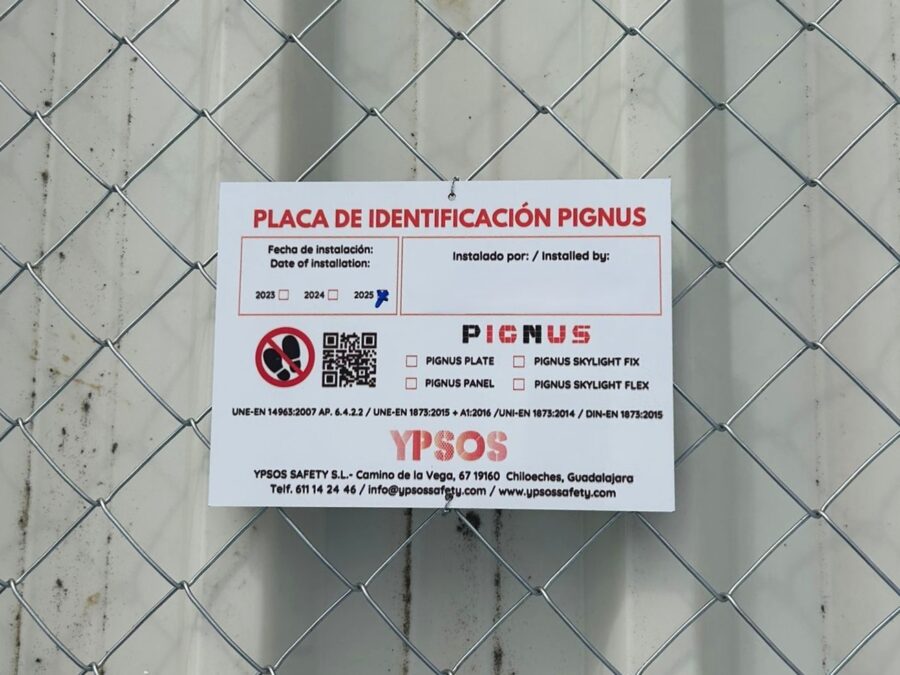
Considerations: That said, this does not mean it is impossible to combine equipment from different manufacturers. In many cases, this combination is technically feasible, provided that an appropriate technical analysis is carried out and the corresponding validation is obtained.
The key is not so much where the equipment comes from as the technical guarantee that the resulting system maintains the required safety conditions.
Conclusion
Compatibility between systems from different manufacturers is a critical aspect of safety at height that, on many occasions, does not receive the technical attention it deserves. Combining equipment without a proper evaluation can compromise the behavior of the system and put workers at risk.
Key Aspects
The regulations set out clear principles, but leave it to manufacturers, companies, and technicians to ensure that the systems work properly as a whole. In this context, the following are essential:
- Complete documentation of the compatibility analysis
- Technical validation through testing when necessary
- Rigorous planning of equipment combinations
- Consultation with manufacturers before making critical decisions
- Specialized technical knowledge of fall protection systems
Final Recommendation
Opting for integrated, well-designed, and properly validated solutions is the best way to ensure effective protection that meets legal requirements, avoiding unnecessary risks and guaranteeing safety when working at height.
Compatibility is not a technical detail: it is a fundamental requirement to ensure that a protection system performs its function when it is truly needed.