

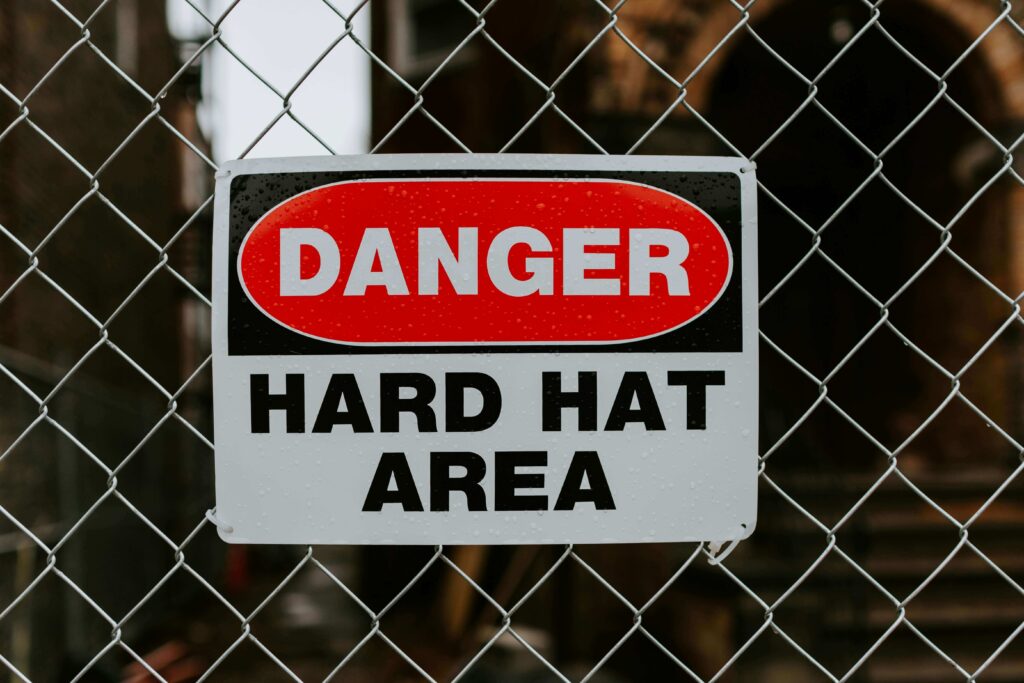
In any work environment where there is a risk, a source of harm, falling objects, or the need to use PPE such as safety helmets or harnesses, signage is necessary and recommended. It is also important for indicating evacuation or emergency areas.
In this post we will talk about the importance of using signage in work at height, its types, and its regulations. At Ypsos, we are very committed to safety and occupational risk prevention, so every day we notice poorly placed or missing signs that can put you in danger.
Is It Important to Properly Mark Work-at-Height Areas?
In the workplace, signage is important to warn workers or third parties of risks so they can take the corresponding preventive measures. That is why it is also essential in work at height, for the following reasons:
- It serves to mark off risk areas or areas that are not passable. With signs you can mark dangerous areas and restrict access during construction.
- Prevents accidents by signaling to workers and other people that work at height is under way, warning about mandatory PPE, preventing passage underneath where objects may fall, avoiding falls from high areas, etc.
- Makes the work easier by showing construction workers where to access safely so they can work in a more coordinated way.
Types of Signage in Work at Height
Signage in work at height is a complementary preventive measure, not a substitute for any protection system. There are different types of visual and acoustic signals. Among the most common are:
Prohibition sign: These are circular with a red border. They prohibit certain actions, such as passage.

Warning sign: warning signs are usually triangular and use very eye-catching colors such as yellow with black borders. Warning signs alert you to a specific hazard, a possible fall, the risk of an object falling from above, etc.
Emergency and evacuation sign: these are usually green and indicate an evacuation route or the emergency exit.

Mandatory signs: these are blue and round. They indicate a requirement, such as wearing a safety helmet or a fall arrest harness.

Light or acoustic signals: they are not the most widely used, but in areas with a lot of noise or poor visibility, a light helps identify a warning more effectively, and can warn of moving machinery, for example.
Types of Signage on Scaffolding
In work at height performed with scaffolding, we can distinguish, as mentioned, between visual signage and acoustic signage.
Visual signage must indicate:
- The maximum load capacity so as not to compromise the stability of the structure; this information is provided by the manufacturer.
- Mark the safe access points, and remind people that climbing on the scaffolding is prohibited.
- Signs telling third parties that work at height is being carried out and there is a danger of falling objects. During assembly and disassembly, it is mandatory to work with a harness and wide-opening double lanyards.
Acoustic signaling includes, for example, public address announcements that can inform of specific risks, sirens to warn of the need to evacuate if necessary, or alarms such as crane reversing alarms.
What Do the Regulations Require Regarding Signage at Height?
The signaling of potential hazards in the workplace, including work at height, is governed by various regulations that require ensuring the safety of workers and third parties and the correct installation, inspection, and signage of scaffolding, in addition to providing adequate training to workers:
- Royal Decree 485/1997, which establishes the minimum provisions for safety and health signage at work.
- Royal Decree 1627/1997: regulates the minimum safety and health provisions at construction sites.
- Standard UNE-EN 12811: Provides specifications for working scaffolds, including safety requirements.
In conclusion, we all know that when working at height we must prevent risks and make as sure as possible. If you are carrying out work at height and are not sure what type of signage you should put up, do not hesitate to contact us and we will help you make sure everything is correct and safe for the whole team and/or third parties.