


What Are Freestanding Guardrails and When Should They Be Installed?
In industry, preventing workplace accidents is a key part of safety, and one of the safety systems related to work at height is freestanding guardrails. In addition to protecting, this safety system belongs to the group of collective protection, that is, systems that mean the worker does not need specific training because they work permanently to prevent risks.
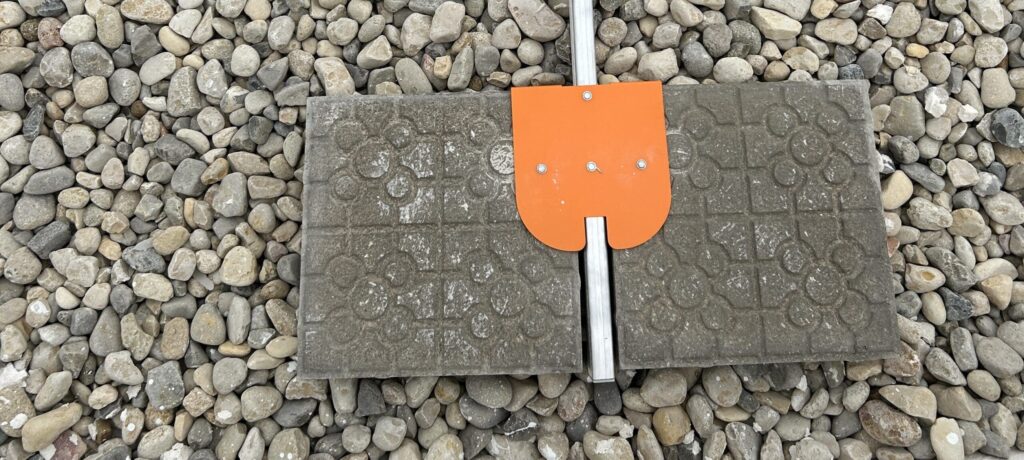
Freestanding guardrails are systems that do not need to be fixed to the surface where they are installed. Unlike other models, freestanding guardrails stay in place thanks to a counterweight system, eliminating the need to drill into the roof or structure where they are installed.
They are generally found on roofs in industrial environments as well as in maintenance areas with fragile roofs or roofs where damaging the existing waterproofing is not allowed.
In recent years, their use has been growing steadily because they are versatile, easy to install, and above all because they provide safety without requiring significant modifications to the roof.
What Advantages Do They Offer Over Other Collective Protection Systems?
Freestanding guardrails have a series of advantages over other collective protection systems: their installation does not require drilling. In environments where drilling the roof could damage its watertightness or strength, these guardrails are an ideal solution.
In addition to avoiding damage to the roof or waterproofing, these safety systems offer:
- Quick installation without the need for complicated tools.
- Compatibility with different types of roofs, including the most delicate ones.
- Ease of relocation, if necessary, for temporary solutions in which the product must later be removed.
- Reduced costs associated with subsequent waterproofing.
Another advantage is that, aesthetically, many manufacturers offer discreet, adaptable solutions, which is of interest in logistics centers, industrial buildings, or facilities where these elements are visible from the outside.
Can Freestanding Guardrails Be Installed on Any Type of Roof?
At first, one might say they can be installed on any type of roof, but there are situations we need to consider before choosing a guardrail system. Although freestanding guardrails are designed for fragile or non-drillable roofs, their installation must be evaluated based on:
- The roof slope: This guardrail model is usually installed on flat or low-slope roofs, typically under 10%.
- The strength of the surface: Although we will not transmit any load to the ground because they are not fixed, the counterweight system applies loads at the points where the counterweight rests, so it is important to make sure the roof can support this load.
- Presence of obstacles or existing installations: Such as solar panels, pipes, machinery, skylights, etc., which make installation difficult.
Therefore, before installing safety guardrails, a prior study of the roof is necessary, taking into account the strength of the structure and the possible risks, in order to ensure the system will be safe.
Regulations: What Must a Manufacturer Comply With?
Safety guardrails, in all their models, must comply with the criteria of the current regulations. At the European level, the standard that covers this type of safety system is UNE EN ISO 14122-3, which sets the design and manufacturing requirements for guardrails.
In addition, roof guardrails must demonstrate through testing that they meet the strength and use requirements it sets. Manufacturers of safety systems must provide their customers with the following documentation:
- Declarations of conformity.
- Reports of tests carried out in accredited laboratories.
- Detailed technical documentation, such as installation, maintenance, and use manuals.
This not only guarantees that the product is manufactured to the standards of the aforementioned standard, but also gives customers and users peace of mind, since it is a tested and reliable solution.
What Should You Consider Before Choosing a Guardrail?
Before choosing a guardrail, it is important not to look at price alone. Below, we will look at some important considerations:
- Type of roof and environment of use.
- Regulatory compliance.
- Ease of installation.
- Durability.
- Maintenance.
Therefore, before choosing this or any safety system, we will carry out the corresponding risk assessment.
Conclusion
Freestanding guardrails are a good solution on roofs where we cannot anchor, and they are increasingly widespread in industrial environments and in areas where maintenance work at height is required. Their main advantage is that they allow us to protect users collectively without drilling into the roof, which makes them a suitable system for working on fragile roofs.
In addition, since it is a collective protection system, its installation reduces risk and provides safety for as long as it remains installed.
It is important to keep in mind that, as with any safety system, the key is to choose well. Always opt for manufacturers that offer tested and certified products, technically backed and adapted to the real needs of each installation. In this way, we will not only be complying with the regulations but also ensuring a safe work environment for everyone.
If you need help figuring out which guardrail you need, or you still have any questions, you can contact us with no obligation.